The Origins of Marlboro Cigarettes
2025-08-24
#### **1. Early Origins: A "Cigarette for Ladies"**
* **Launch Year & Founder:** The Marlboro brand was created in **1924** by **UK**-based Philip Morris & Co. Ltd. The company had established an American subsidiary in New York in 1902, which later became Philip Morris USA.
* **Initial Market Positioning:** Initially, Marlboro was advertised with the slogan **“Mild As May”**, explicitly positioning it as a **premium cigarette for women**. Its filter had a red tip, designed to hide lipstick stains and maintain a feminine elegance.
* **Market Performance:** In its early years, Marlboro had minimal market share and was not a major brand.
#### **2. The Pivotal Moment: Health Concerns and Rebranding**
The 1950s were a turning point that fundamentally changed Marlboro's destiny.
* **The Context:** In the early 1950s, growing medical research began linking smoking to health issues like lung cancer. This led tobacco companies to introduce **filtered cigarettes**, marketing them as a safer alternative (a claim that was and remains debated). At the time, the male market was dominated by non-filtered cigarettes, as filters were perceived by many men as being less masculine.
* **The Company's Challenge:** Philip Morris needed a filtered cigarette that could appeal to the male consumer to capture this new market.
* **The Advertising Legend:** The company hired the **Leo Burnett** advertising agency to undertake a complete overhaul of the brand.
#### **3. The Birth of the "Marlboro Man"**
Leo Burnett's team executed what became a textbook example of brand marketing:
* **Complete Image Overhaul:** They completely discarded the old, feminine, and elegant image.
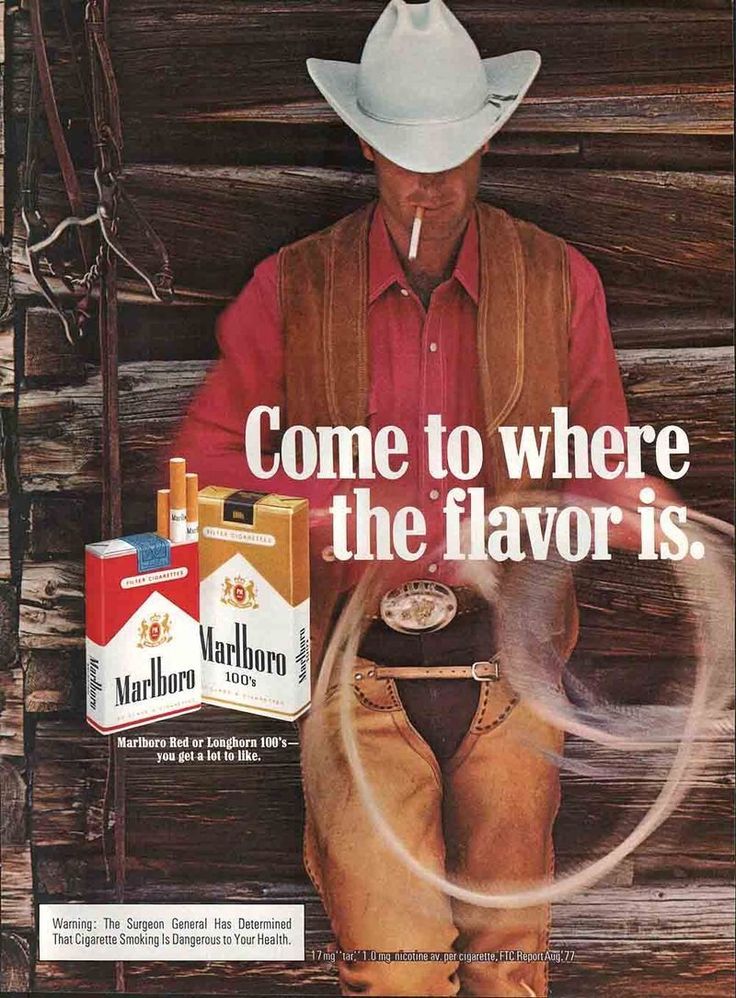
* **Creating a Brand Icon:** They created the **"Marlboro Man"**—a rugged, tough, and masculine cowboy from the American West.
* **Advertising Theme:** The ads were set against the backdrop of the vast open range, with the iconic theme: "**Come to where the flavor is. Come to Marlboro Country.**"
* **Packaging Redesign:** They introduced the now-iconic **red and white chevron design**, making the pack more striking and masculine.
#### **4. Massive Success and Controversy**
* **Market Response:** The campaign was a **stunning success**. Within just one year, Marlboro's sales skyrocketed by an astounding **3,000%**, transforming it from a minor brand with less than 1% market share into one of America's best-selling cigarettes.
* **Cultural Icon:** The "Marlboro Man" became more than an advertising tool; it became a symbol of American individualism, freedom, and masculinity.
* **Controversy & Bans:** As the health dangers of smoking became undeniable, Marlboro, as the world's most recognizable cigarette brand, became a primary target for anti-smoking campaigns. The "Marlboro Cowboy" ads were eventually banned in many countries for their powerful appeal to youth.
#### **5. Parent Company and Global Impact**
* The Marlboro brand is now owned by **Altria Group, Inc.** (within the U.S. market) and **Philip Morris International, Inc.** (outside the U.S.).
* Despite facing stringent advertising restrictions and packaging regulations worldwide (such as mandatory graphic health warnings), Marlboro remains one of the most valuable and best-selling cigarette brands globally.
### **Summary**
The origin story of Marlboro is a classic business case study of failure and rebirth. It transformed from a niche **cigarette for ladies** into the world's most famous **male cigarette brand** through a brilliant **rebranding** campaign by the Leo Burnett agency. The creation of the powerfully masculine "Marlboro Man" icon profoundly impacted the global tobacco industry and the field of advertising.